log and alarm settings cannot be ignored in the maintenance of the us high-defense server website, which is the core link to ensure service availability and security. reasonable logs and alarms not only help to quickly locate faults, but also provide early warnings in the early stages of ddos and other attacks, reducing business interruption and losses. this article provides practical suggestions for operations and security teams around log types, collection and storage strategies, alarm configuration principles, and compliance points.
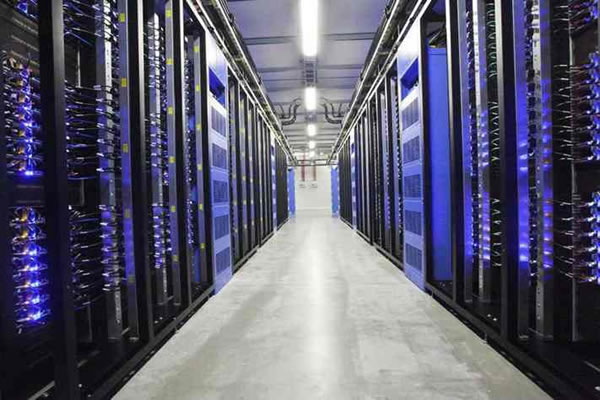
logs are the basis for monitoring and forensics, recording requests, connections, system behaviors and security events. in the us high-defense server environment, logs can reflect traffic anomalies, connection timeouts and firewall interceptions, providing evidence for ddos protection, traffic analysis and retrospective auditing. therefore, establishing a wide-coverage and traceable log system is the first step in website maintenance and emergency response.
priority should be given to collecting access logs, system logs, application logs, network boundary logs and security device logs (such as waf, ids/ips). access logs are used for traffic analysis, system and application logs help locate performance bottlenecks, and security device logs are used to detect traces of attacks. set log priority according to business importance to ensure that key data is not lost.
it is recommended to use centralized collection and hierarchical storage: real-time logs are sent to siem or log platforms for alarms and queries, and cold data are archived to cheap object storage to meet forensic and compliance requirements. deploying storage within the united states or choosing compliant hosting reduces cross-border compliance risks and ensures retrieval performance and backup reliability.
alerts must be timely, accurate and actionable. set multi-dimensional indicators (traffic, request rate, response time, error rate, number of connections) to trigger combinations to avoid a single threshold causing a large number of false alarms. at the same time, the alarm level and handling process should be clarified so that the team can quickly determine the priority and implement standardized responses when receiving an alarm.
the threshold needs to be dynamically adjusted based on historical baselines and business peaks, and adaptive or percentile methods are used to reduce false alarms. introduce suppression rules and alarm aggregation to distinguish short-term sudden fluctuations from sustained trends, reduce interruptions and improve the response rate to real anomalies. regularly review alarm rules and optimize thresholds based on drills.
the notification channel should support multiple channels in parallel (sms, email, pager, operation and maintenance platform) and implement a secondary confirmation mechanism. establish sla and duty schedule to clarify the responsibilities of the first-line, second-line and security teams. verify alarm links and response processes through regular drills to ensure that all parties can coordinate to deal with an attack or failure on the u.s. high-defense servers .
when deploying high-defense servers in the united states, local laws and customer privacy requirements must be taken into consideration, and log retention periods and desensitization policies must be formulated. mask or summarize sensitive fields, clarify who can access the original logs, and retain audit records. proper life cycle management not only meets compliance but also controls storage costs.
integrating log and alarm systems with automated response, traffic cleaning, and work order systems can significantly shorten troubleshooting time. through api connection with the protection platform, load balancing and container orchestration system, alarms can be automatically executed to perform repair actions or trigger temporary expansion, thereby improving resilience in the event of ddos or sudden traffic.
for website maintenance of us high-defense servers, building a complete log and alarm system is the key to improving security and availability. it is recommended to implement centralized collection, hierarchical storage, baseline-driven alarm thresholds and multi-channel notifications, combined with regular drills and compliance audits for continuous optimization. through automation and cross-system integration, operation and maintenance investment and false alarm rates can be reduced while ensuring business continuity.
- Latest articles
- Research On Improving The Accuracy Of Vietnamese Native IP In Mobile Advertising Targeting
- The Low-latency Connection Strategy Helps Malaysian Cloud Servers Provide A Better Experience For Asia-Pacific Users
- High-availability Architecture Design For US High-defense Servers And Card Games From An Operations And Maintenance Perspective
- From Bandwidth To Hard Drive Read/write Metrics, It Is Crucial To Assess The Impact Of Cambodia's Junk Servers On Business
- A Guide To Leasing Server Vendors For Small And Medium-sized Enterprises In Vietnam, Evaluating Cost-effectiveness And Scalability
- Video Site Load Tests Compared To Several Mainstream Malaysian VPS Products
- Thailand Cloud Server Rental Costs, Budget Recommendations For Small Sites And High-traffic Projects
- Comparing Local Data Centers And Singapore Cloud Server Latency And Reliability Differences
- Migration Reference: Vietnam Native IP Cloud Servers: Steps For Migrating From Shared IP To Native IP
- Popular tags
-

Why Choosing A Professional US Server Hosting Service Is A Wise Move
This article discusses why it is wise to choose a professional US server hosting service and analyzes its advantages in security, performance, technical support, etc. -

Is The Us High-defense Server Good? Real User Evaluation Analysis
this article analyzes real user reviews of u.s. high-defense servers, discusses their performance, stability, and applicable scenarios to help you make a wise choice. -
A Trade-off Between Cost Of Hosting Servers In The United States And Quality Of Service
Discuss the trade-offs between the cost of hosting servers in the United States and the quality of service, helping businesses and individuals make informed choices.